When businesses want more website traffic and enquiries, two of the most common digital marketing options are Search Engine Optimisation (SEO) and Pay-Per-Click advertising (PPC).
SEO vs PPC, Both help businesses reach people searching online, but they work differently.
SEO focuses on improving your website’s visibility in unpaid search results. PPC allows you to pay for advertising placements, such as Google Search ads, to reach potential customers.
So, which is better: SEO or PPC?
The answer depends on your business goals, available budget, competition, website condition and how quickly you need enquiries. SEO can help build sustainable organic visibility over time, while PPC can provide faster access to relevant search traffic when campaigns are properly set up and approved.
For many businesses in Dubai, the most effective approach is not necessarily choosing one over the other. It is understanding when to use each channel and how to measure the business results they generate.
1. What Is SEO?
Search Engine Optimization (SEO) is the process of improving your website so that it can appear more prominently in unpaid search engine results.
When someone searches for a product or service on Google, the search engine evaluates many factors to determine which pages are relevant and useful for that search.
SEO helps search engines understand your website and helps potential customers discover your business.
Google explains that SEO involves helping search engines understand your content and helping users find your website. However, following SEO best practices does not guarantee that a page will be indexed or achieve a particular ranking.
Source: Google Search Central (SEO Starter Guide)
How does SEO work?
A professional SEO campaign generally includes several activities:
- Keyword research: Identifying the search terms your potential customers use.
- On-page SEO: Improving page titles, headings, content, internal links and other page elements.
- Technical SEO: Addressing crawling, indexing, website speed, mobile usability and technical issues.
- Content optimization: Creating useful service pages, landing pages, blogs and supporting resources.
- Local SEO: Improving visibility for location-based searches, including Google Business Profile optimization.
- Off-page SEO: Building relevant authority through genuine mentions, references and quality backlinks.
- Performance monitoring: Tracking rankings, organic traffic, enquiries and other meaningful outcomes.
For example, a Dubai-based website development company may want to appear when potential customers search for:
- Website development company in Dubai
- eCommerce website development Dubai
- Shopify developer Dubai
- Custom website development services
SEO helps the business build visibility for relevant searches by improving its website and the information it provides.

Benefits of SEO
- Builds long-term organic search visibility.
- Helps attract people actively searching for your services.
- Can generate traffic without paying Google for every click.
- Supports brand credibility and online authority.
- Creates opportunities to rank for multiple relevant keywords.
- Supports local discovery through location-based searches.
- Can continue attracting visitors after individual content pieces have been published.
Limitations of SEO
SEO is not an instant lead-generation solution.
- It can take months to build meaningful organic visibility.
- Results depend on competition, website condition, content quality and other factors.
- Search engine updates can affect rankings.
- Consistent optimization and content development may be required.
- Rankings do not automatically translate into enquiries or sales.
The important point: SEO is an ongoing investment in your website’s visibility, relevance and ability to attract potential customers.
2. What Is PPC Advertising?
Pay-Per-Click (PPC) is an online advertising model where advertisers generally pay when someone clicks on their advertisement.
Google Ads is one of the most widely used PPC platforms. Businesses can advertise against relevant search terms and reach potential customers when they are actively looking for products or services.
For example, a company offering office fit-out services in Dubai may run Google Ads for searches such as:
- Office fit out company Dubai
- Commercial interior design Dubai
- Office renovation contractors Dubai
When an eligible search takes place, Google runs an advertising auction to determine which ads can appear and where.
The position of an advertisement is not determined by the bid alone. Google considers factors including bid, ad and landing page quality, competition, search context and other auction-time factors.
Sources: Google Ads: How the Ad Auction Works and About Ad Rank.
How does PPC work?
A typical Google Ads campaign involves:
- Keyword selection: Choosing searches relevant to your products or services.
- Campaign setup: Selecting campaign objectives, locations, audiences and targeting.
- Ad creation: Writing advertisements that match customer search intent.
- Budget allocation: Setting daily or campaign spending limits.
- Bidding strategy: Choosing how Google should optimize bids.
- Landing page optimization: Ensuring visitors reach a relevant page with a clear next step.
- Conversion tracking: Measuring calls, forms, purchases and other valuable actions.
- Campaign optimization: Reviewing search terms, costs, conversions and lead quality.
Benefits of PPC
- Can generate visibility soon after campaigns are approved and become eligible to serve.
- Provides control over campaign budgets, targeting and messaging.
- Allows businesses to target specific locations and search themes.
- Can support product launches, promotions and seasonal campaigns.
- Provides search-term and conversion data that can inform marketing decisions.
- Allows businesses to test landing pages and advertising messages.
Limitations of PPC
- You pay for advertising clicks and placements according to the campaign’s bidding model.
- Competitive industries can have expensive clicks.
- Traffic may decline when campaigns stop or budgets are exhausted.
- Poor targeting can generate irrelevant clicks.
- Clicks do not guarantee enquiries, qualified leads or sales.
- Campaigns require ongoing monitoring and optimization.
- Advertising performance is influenced by competition, auction conditions and platform policies.
The important point: PPC can help your business reach potential customers faster, but profitable results depend on targeting, campaign quality, landing pages, conversion tracking and sales follow-up.
3. SEO vs PPC: What Are the Main Differences?
SEO and PPC both target people using search engines, but their investment models, timelines and long-term value are different.
| Comparison | SEO | PPC (Google Ads) |
|---|---|---|
| Search placement | Organic search results | Paid advertising placements |
| Payment model | Ongoing optimization investment | Advertising spend, usually charged per click in search campaigns |
| Speed | Usually takes time to build visibility | Can generate visibility sooner after approval and eligibility |
| Traffic | Organic visitors | Paid advertising visitors |
| Long-term value | Can continue attracting traffic from established rankings | Traffic generally depends on continued campaign activity |
| Budget control | Investment can be planned around SEO activities | Campaign budgets and bids can be adjusted |
| Competition | Competes for organic visibility | Competes in advertising auctions |
| Measurement | Rankings, impressions, clicks, enquiries and other outcomes | Impressions, clicks, conversions, cost and lead quality |
| Main challenge | Building and maintaining organic visibility | Managing acquisition costs and conversion performance |
Neither channel guarantees business growth. The real question is how effectively each channel attracts the right audience and converts that audience into customers.
4. Is SEO Cheaper Than PPC?
SEO is often described as cheaper than PPC because businesses do not pay Google for every organic click.
However, this does not mean SEO is free.
SEO requires investment in research, technical improvements, content, optimization, reporting and ongoing work. PPC has its own cost structure, usually involving advertising spend and potentially an agency or management fee.
A fair comparison should consider the total cost of acquiring a customer, not just the cost of a website visit.
Understanding the difference between SEO costs and PPC costs
SEO investment may include:
- SEO agency or consultant fees.
- Technical website improvements.
- Content writing and optimization.
- Link acquisition and digital PR activities.
- Local SEO and Google Business Profile management.
- Ongoing reporting and performance improvements.
PPC investment may include:
- Google advertising spend.
- Campaign management fees.
- Landing page development and optimization.
- Conversion tracking and analytics setup.
- Creative and ad copy development.
- Ongoing campaign optimization.
An illustrative cost comparison
Consider a hypothetical Dubai business comparing two monthly marketing approaches.
| Minimum Cost component | SEO approach | PPC approach |
|---|---|---|
| Monthly AI SEO Packages or campaign management fee | AED 1,250 | AED 1,250 |
| Monthly Google Ads spend | AED 0 | AED 5,000 |
| Total monthly investment | AED 1,250 | AED 6,250 |
| Annual investment at the same monthly level | AED 15,000 | AED 75,000 |
These figures are illustrative examples, not a quotation or a claim about actual campaign performance. They also assume that the same monthly investment continues throughout the year and exclude additional website development, content and other costs.
The comparison highlights an important difference: PPC advertising spend is separate from the fee charged to manage the campaign. A business should not compare an SEO agency fee with a PPC management fee while ignoring the advertising budget.
Why cost per click is not the same as cost per lead
Suppose a business receives 100 clicks from Google Ads at AED 10 per click.
Its advertising cost is AED 1,000.
But if those clicks generate only two enquiries, the cost per enquiry is AED 500. If only one enquiry is a genuine sales opportunity, the cost per qualified lead is AED 1,000.
This is why businesses should evaluate more than traffic and clicks.
Useful measurements include:
- Cost per enquiry.
- Cost per qualified lead.
- Cost per booked appointment.
- Cost per customer.
- Customer acquisition cost.
- Revenue and return on marketing investment.
A channel with cheaper clicks may still produce more expensive customers.
5. Which Generates Better Leads: SEO or PPC?
There is no universal answer. Lead quality depends on the customer’s search intent, the keyword, the landing page, campaign targeting and the business’s ability to convert enquiries.
When SEO can generate strong leads
SEO can attract potential customers researching a particular service, comparing providers or looking for a solution.
For example, a business searching for “SEO company in Dubai” may already be considering an SEO company.
A well-optimized service page can answer the customer’s questions, explain the agency’s capabilities and encourage a relevant enquiry.
SEO can also attract visitors at different stages of the buying journey through informative articles, comparison pages and service-related content.
When PPC can generate strong leads
PPC can target specific searches where customers demonstrate an immediate requirement.
For example:
- Emergency AC repair Dubai.
- Buy office furniture Dubai.
- Luxury car rental Dubai.
- Commercial cleaning services Dubai.
A relevant advertisement can direct the searcher to a focused landing page with a clear call to action.
However, a click does not necessarily mean the visitor is ready to buy. Some users are comparing prices, researching options or searching for information.
Measure qualified leads, not just enquiries
Consider this hypothetical example:
| Measurement | SEO | PPC |
|---|---|---|
| Monthly investment | AED 1,250 | AED 6,250 |
| Website visitors | 1,000 | 500 |
| Enquiries | 30 | 25 |
| Qualified leads | 15 | 10 |
| Cost per enquiry | AED 116.67 | AED 250 |
| Cost per qualified lead | AED 233.33 | AED 625 |
This is an illustrative calculation, not actual Si3 Digital client data or an industry benchmark.
It demonstrates why traffic volume alone is not a reliable measure of campaign success. In this example, PPC generates enquiries, but SEO produces more qualified leads at a lower illustrative cost.
In another business, the results could be completely different.
For an accurate comparison, both channels should use consistent lead definitions, tracking periods and attribution rules.
6. Does Google Ads Help SEO Rankings?
No. Running Google Ads does not directly improve your website’s organic rankings in Google Search.
Paid advertisements and organic search results operate through different systems.
A business cannot pay Google Ads to improve its organic position for a keyword.
However, PPC and SEO can support each other in indirect ways.
How PPC data can support SEO
1. Discovering valuable search terms
Google Ads search-term data can reveal the actual searches that trigger advertisements. This information may help identify relevant topics and keywords for SEO.
2. Testing customer messaging
Businesses can test different advertising headlines and messages to understand which value propositions attract enquiries. Successful messages may inform website content and service-page improvements.
3. Identifying conversion opportunities
Paid campaign data can help identify which landing pages and offers generate valuable actions. Similar improvements may benefit organic visitors.
4. Understanding search demand
PPC campaign performance can provide useful insight into customer interest, although results should be interpreted carefully. Campaign targeting, budget, bids, competition and seasonal demand can all affect the data.
5. Supporting visibility across search results
A business may appear in both paid and organic search results for relevant searches. This can create additional opportunities to reach potential customers, but it does not guarantee a higher combined click-through rate or improved organic ranking.
The distinction is important: PPC can provide useful marketing information, but it is not a direct SEO ranking factor.
7. When Should Your Business Choose SEO?
SEO is particularly useful when your business wants to build consistent organic visibility and attract customers through relevant searches over time.
Consider prioritizing SEO when:
- Your website is not receiving enough organic traffic.
- Customers regularly search Google for your products or services.
- You want to reduce dependence on paid advertising over time.
- Your business operates in a competitive market.
- You need visibility across multiple service-related keywords.
- You want to strengthen your website’s credibility and information quality.
- Your business can invest consistently rather than expecting immediate results.

Example: SEO for a Dubai B2B service provider
Imagine a company providing corporate IT support in Dubai.
Its potential customers may search for:
- IT support company Dubai.
- Managed IT services UAE.
- Corporate IT support services.
- Network security services Dubai.
A focused SEO strategy can build relevant service pages, supporting content and local visibility around these searches.
Over time, this can create multiple organic entry points for potential customers.
SEO is therefore a suitable investment when the business wants to build a stronger search presence rather than relying entirely on advertising.
8. When Should Your Business Choose PPC?
PPC can be useful when your business needs to reach potential customers quickly, promote a specific offer or test demand for a product or service.
Consider prioritizing PPC when:
- You are launching a new product or service.
- Your website needs enquiries while SEO visibility develops.
- You have a time-sensitive promotion.
- Your business operates in a location with clear search demand.
- You want to test different service offers or landing pages.
- You have a defined advertising budget.
- You can track enquiries and assess their quality.
Example: PPC for a Dubai property service
A property maintenance company may want enquiries for AC servicing, plumbing or electrical maintenance in specific areas of Dubai.
Google Ads can target relevant searches and locations, directing users to service-specific landing pages.
The company can then measure calls, WhatsApp enquiries and completed bookings to understand whether the campaign is generating profitable business.
However, it should not assume that a high number of clicks means the campaign is successful.
Search terms, geographical targeting, service availability, landing page relevance and lead handling all influence the outcome.
9. Why Should Businesses Combine SEO and PPC?
For many businesses, SEO and PPC are more effective when managed as complementary channels rather than competing alternatives.
SEO can build long-term organic visibility, while PPC can help capture relevant demand through paid placements.
A combined approach can be particularly useful when a business needs both immediate marketing activity and a longer-term growth strategy.
Five ways SEO and PPC can work together
1. PPC can support lead generation while SEO develops
SEO takes time to build. PPC can help a business reach potential customers during this period, provided the campaign is properly targeted and economically viable.
2. PPC search data can inform SEO priorities
Search-term reports can help identify customer language and relevant topics. These insights can be considered when planning service pages and supporting content.
3. SEO content can improve the customer journey
Potential customers may need more information before making a decision. Informative SEO content can support people researching services after seeing an advertisement.
4. Both channels can support different stages of the buying journey
A potential customer might discover a business through an organic article, return through a paid advertisement and then submit an enquiry. Proper measurement is needed to understand this journey.
5. Businesses can compare acquisition performance
When both channels use consistent conversion tracking and lead-quality definitions, businesses can assess their relative contribution and adjust investment accordingly.
The goal is not simply to appear in more places. It is to generate more valuable business opportunities without wasting marketing spend.
10. SEO vs PPC for Different Industries in Dubai
The right marketing mix depends on how customers search, how long they take to make a decision and how valuable each customer is.
| Industry | Potentially useful approach | Why |
|---|---|---|
| Real estate | SEO + PPC | SEO can build visibility for property-related searches, while PPC can target specific projects, locations and buyer enquiries. |
| E-commerce | SEO + PPC | SEO supports category and product discovery, while PPC can promote products and capture purchase intent. |
| Healthcare | SEO + PPC | SEO can support service and treatment information, while carefully managed PPC can reach people searching for specific services. Advertising must comply with applicable regulations and platform policies. |
| B2B services | SEO-led + targeted PPC | SEO can build authority around specialized services, while PPC can target high-intent commercial searches. |
| Home services | PPC + local SEO | PPC can capture urgent searches, while local SEO supports ongoing discovery in relevant service areas. |
| Hospitality | SEO + PPC | SEO can support destination and service discovery, while PPC can promote specific offers and booking opportunities. |
| Automotive | SEO + PPC | SEO can support model, service and comparison searches, while PPC can promote specific inventory and high-intent services. |
These are strategic starting points, not fixed rules. A business should assess its competition, search demand, customer value, budget and conversion performance before deciding how much to invest in each channel.
11. How Much Should a Dubai Business Spend on SEO and Google Ads?
There is no single budget that works for every business.
A suitable marketing budget depends on the industry, competition, service value, location, website condition and expected cost of acquiring a customer.
For example, a business selling low-value products may need a different acquisition strategy from a company providing high-value B2B services.
Consider these factors before setting a budget
1. Your average customer value
How much revenue does an average customer generate? Is the customer likely to return or purchase additional services?
2. Your acceptable acquisition cost
How much can your business reasonably spend to acquire a customer while maintaining profitability?
3. Your search competition
How many businesses are competing for the same keywords? Are the searches highly commercial or mostly informational?
4. Your website’s readiness
Does your website have relevant service pages, clear contact information, persuasive content and working enquiry forms?
5. Your sales conversion rate
How many enquiries become qualified opportunities, appointments and paying customers?
6. Your available marketing budget
Can you invest consistently in SEO, or do you need to prioritise specific paid campaigns first?
A practical three-stage budget approach
Rather than dividing the budget equally between SEO and PPC, consider the following approach.
Stage 1: Build the foundation
- Audit the website and identify technical issues.
- Improve important service and landing pages.
- Set up analytics and conversion tracking.
- Identify commercially valuable search terms.
- Review the website’s enquiry process.
Stage 2: Capture existing demand
- Run targeted Google Ads campaigns where search demand exists.
- Prioritize services with strong commercial value.
- Use relevant locations and carefully selected keywords.
- Monitor search terms and lead quality.
- Continue SEO improvements and content development.
Stage 3: Optimise acquisition
- Compare the cost per qualified lead from each channel.
- Identify keywords and services generating valuable enquiries.
- Improve landing pages and conversion rates.
- Adjust advertising budgets based on performance.
- Expand SEO coverage around proven customer needs.
This approach helps businesses make decisions based on performance rather than choosing a fixed SEO-to-PPC percentage without understanding their market.
12. How Do You Measure SEO and PPC ROI?
A marketing campaign should not be judged only by rankings, clicks, impressions or website traffic.
These metrics help explain activity, but business owners ultimately need to understand whether marketing is generating valuable customers.
Important SEO performance indicators
- Organic impressions and clicks.
- Search visibility and keyword movements.
- Organic landing-page traffic.
- Relevant enquiries from organic visitors.
- Qualified leads and sales.
- Organic cost per qualified lead.
- Revenue attributed to organic search, where measurement is reliable.
Important PPC performance indicators
- Advertising impressions and clicks.
- Click-through rate (CTR).
- Cost per click (CPC).
- Conversion rate.
- Cost per enquiry.
- Cost per qualified lead.
- Bookings, purchases and revenue.
- Return on ad spend (ROAS), where revenue tracking is appropriate.
Key formulas businesses should understand
Cost per Enquiry
Total Marketing Investment ÷ Number of Enquiries
Cost per Qualified Lead
Total Marketing Investment ÷ Number of Qualified Leads
Customer Acquisition Cost (CAC)
Total Sales and Marketing Acquisition Costs ÷ Number of New Customers Acquired
Marketing ROI
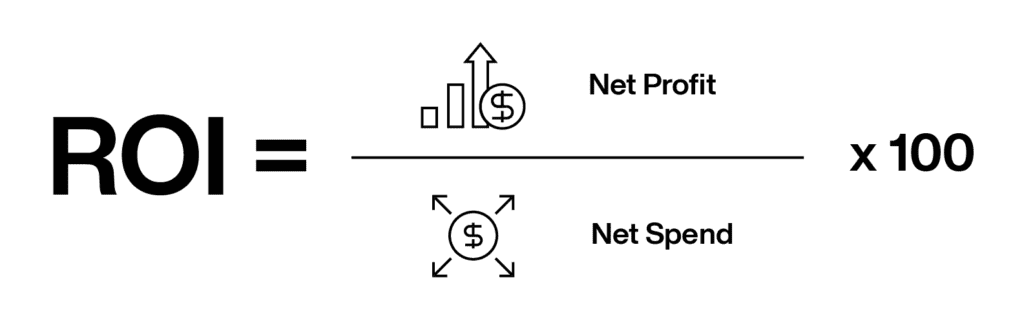
For a meaningful comparison, businesses should include the relevant channel costs and use consistent attribution rules. They should also avoid counting the same customer or revenue more than once when multiple channels contribute to a conversion.
Why conversion tracking matters
A website may receive enquiries through several channels:
- Contact forms.
- Phone calls.
- WhatsApp.
- Email.
- Online purchases.
- Appointment bookings.
If these actions are not tracked properly, a business may underestimate or overestimate the performance of its marketing campaigns.
For example, Google Ads may appear to generate fewer conversions if phone calls and WhatsApp enquiries are not measured. Similarly, a campaign may appear successful because it generates many form submissions, even though most are irrelevant or unqualified.
A reliable marketing report should connect website activity with actual business outcomes wherever the available data allows.
13. Can SEO Reduce Your Google Ads Costs?
SEO can help reduce a business’s dependence on paid advertising over time, but it does not automatically reduce Google Ads costs.
For example, if a business develops strong organic visibility for several commercially valuable keywords, it may receive relevant traffic without paying for every organic visit.
The business may then decide to adjust its paid advertising budget.
However, there are important considerations:
- Organic rankings are not guaranteed or permanent.
- Some keywords may remain highly competitive.
- Paid advertising may still be useful for specific locations, offers or services.
- Organic and paid search visitors may behave differently.
- Reducing advertising spend should be based on actual performance, not rankings alone.
The better objective is to improve the overall cost of customer acquisition, not simply reduce the advertising budget.
14. What Are the Common SEO and PPC Mistakes Businesses Should Avoid?
Businesses can spend considerable amounts on digital marketing without achieving the expected results if the underlying strategy is not properly planned.
Common SEO mistakes
- Choosing keywords without considering customer intent.
- Publishing content mainly to include keywords.
- Ignoring technical website issues.
- Creating multiple pages targeting the same search intent.
- Neglecting local SEO and Google Business Profile.
- Focusing on rankings instead of enquiries.
- Expecting immediate results from a new SEO campaign.
Common PPC mistakes
- Launching campaigns without clear conversion tracking.
- Using broad or irrelevant keywords without suitable controls.
- Sending all advertisements to the homepage.
- Ignoring search-term reports.
- Focusing on clicks instead of qualified leads.
- Failing to monitor campaign performance.
- Treating the advertising budget as the only campaign cost.
- Continuing campaigns without assessing profitability.
A mistake common to both channels
Driving traffic to a website that is not ready to convert.
Even a well-managed SEO or PPC campaign can underperform if the website has unclear service information, weak calls to action, poor mobile usability or a complicated enquiry process.
Marketing should therefore consider the complete customer journey, from the initial search to the final enquiry or purchase.
15. How Can Si3 Digital Help Your Business with SEO and PPC?
Choosing between SEO and PPC should begin with understanding your business, your target customers and your current online visibility.
At Si3 Digital, we approach digital marketing by considering how potential customers discover a business, what information they need before making a decision and how they can become genuine enquiries.
With over 15 years of experience in the UAE digital market, Si3 Digital provides services that can support different stages of online growth.
Our capabilities include:
- SEO: Technical SEO, on-page optimisation, content strategy, keyword research and organic visibility improvements.
- Local SEO: Google Business Profile optimisation and location-based search visibility.
- Google Ads Management: Campaign planning, keyword targeting, advertising management and performance optimisation.
- Website Development: Business websites, ecommerce websites and conversion-focused web pages.
- Social Media Marketing: Brand visibility, audience engagement and paid social campaigns.
- Website Maintenance: Ongoing technical support and website performance management.
Rather than assuming every business needs the same marketing mix, we consider its website, industry, competition, target audience and available budget.
Whether your priority is to build organic search visibility, generate enquiries through Google Ads or combine both approaches, the strategy should be aligned with measurable business objectives.
Explore our SEO Services in Dubai and Digital Marketing Services to understand how different marketing channels can support your business.
16. Frequently Asked Questions About SEO vs PPC
1. What is the main difference between SEO and PPC?
SEO improves a website’s visibility in unpaid search engine results, while PPC uses paid advertisements to reach potential customers. SEO focuses on building organic visibility over time, whereas PPC can provide faster access to paid search placements when campaigns are eligible to serve.
2. Is SEO better than Google Ads?
Neither is universally better. SEO is useful for building long-term organic visibility, while Google Ads can help businesses reach relevant searches more quickly. The right option depends on the business’s goals, competition, budget and lead-generation requirements.
3. Is SEO cheaper than PPC?
SEO does not require payment to Google for each organic click, but it still involves ongoing investment in optimisation, content and technical improvements. PPC includes advertising spend and may also involve campaign management fees. The better comparison is the total cost per qualified lead or customer.
4. Which generates leads faster, SEO or PPC?
PPC can generate visibility and potential enquiries sooner after a campaign is approved and eligible to serve. SEO usually takes longer to build meaningful organic visibility. Neither channel guarantees enquiries or sales.
5. Does Google Ads improve organic SEO rankings?
No. Running Google Ads does not directly improve organic Google rankings. However, advertising data may help businesses understand search terms, customer behaviour and conversion opportunities that can inform their SEO strategy.
6. Can SEO and PPC work together?
Yes. SEO can build organic visibility while PPC captures relevant demand through paid placements. The two channels can also share insights about search terms, messaging and landing-page performance. Their combined value should be measured rather than assumed.
7. How much does SEO cost in Dubai?
SEO costs in Dubai vary according to website size, competition, industry, target locations and the work required. A small local business may need a different level of investment from a large ecommerce or enterprise website. Businesses should compare deliverables, expertise and expected outcomes rather than choosing an SEO provider based on price alone.
8. How much should a business spend on Google Ads in Dubai?
The required budget depends on keyword competition, expected cost per click, target locations, conversion rates and customer value. Businesses should estimate the budget needed to generate enough meaningful data and qualified enquiries rather than selecting an arbitrary daily amount.
9. Is SEO or PPC better for a small business?
SEO can help a small business build long-term visibility, especially for relevant local searches. PPC can help it promote specific services and reach potential customers sooner. A combination may be appropriate if the business can support both investments.
10. Is PPC worth it for a new business?
PPC can be useful for a new business that needs to test demand or generate enquiries before organic visibility develops. However, the business should have a relevant landing page, a clear offer, a realistic budget and proper conversion tracking.
11. Can SEO reduce Google Ads expenditure?
SEO can reduce reliance on paid traffic if the business achieves and maintains relevant organic visibility. However, this is not automatic. Paid campaigns may remain valuable for competitive keywords, promotions and specific customer segments.
12. How do you calculate SEO and PPC ROI?
Businesses can calculate marketing ROI by comparing attributed revenue with the total marketing investment. They should also measure cost per qualified lead, customer acquisition cost and conversion rates. Consistent tracking and attribution rules are essential for a fair comparison.
13. Which is better for B2B lead generation?
SEO can help B2B businesses attract decision-makers researching specialised services, while PPC can target high-intent searches and specific commercial requirements. The best approach depends on the sales cycle, service value, search demand and quality of enquiries.
14. How long does SEO take to show results?
There is no fixed SEO timeline. Results depend on the website’s starting condition, competition, content quality, technical requirements and the consistency of optimisation. Businesses should evaluate progress over time using visibility, traffic and meaningful enquiry indicators rather than expecting guaranteed rankings by a specific date.
15. Do I need both an SEO and Google Ads agency?
Not necessarily. Some businesses need SEO first, others need paid advertising, and some benefit from both. What matters is having a clear strategy, competent execution, transparent reporting and a reliable way to measure business results.

Final Verdict: Should You Choose SEO or PPC?
SEO and PPC serve different purposes, and choosing between them should not be based on which channel promises faster traffic or lower costs.
- Choose SEO when your priority is building long-term organic visibility, attracting relevant search traffic and developing a stronger online presence.
- Choose PPC when your priority is reaching potential customers sooner, promoting specific services or testing demand through paid search advertising.
- Combine SEO and PPC when your business needs both immediate demand capture and a longer-term organic growth strategy.
For businesses in Dubai, the most important consideration is not how many clicks a campaign generates. It is whether those clicks and organic visits lead to qualified enquiries, customers and profitable growth.
A well-planned digital marketing strategy should connect search visibility with the complete customer journey, from discovery to conversion.
The right question is not simply SEO vs PPC. It is which combination of marketing channels can help your business acquire the right customers at a sustainable cost.